English Bluebell

bluebells

I had been thinking about putting this poem on the site as it is the time of year for bluebells, a sort of seasonal contribution. Then what happens?

On the way in to work this morning a typical Radio Four item, about the struggle of the English bluebell to resist the Spanish strain, which is spreading through our woods. Not only that, but now there is a hybrid bluebell which can look like a bit of both!

This poem originated after a favourite walk around Blanchland in Northumberland. Now I find I could be writing a whole book of poems on the subject!  Something to think about.

Here is the one I have written for now…..

English Bluebell

Slender, spread across the riverbank
Your slim neck bows slightly.
A teasing darkness just below the surface,
You lean into the dappled sun.
Fragility shimmers in a wash of purple,
Delicate waves pulsate in the breeze.
Those Spanish girls are not for me,
Strutting with their firm thighs,
Bottoms held high,
Flaring out their skirts, flashing
In flamboyant gesticulation,
Forcing their way into front gardens!
Your subtle fragrance holds more allure
Than impostors such as these.

Steve Bishop

Newburn Morning Run

2015-09-13 13.11.44

This poem came about following the Great North Run in September 2015 which I completed in just under two hours.  It was my fifth GNR so not especially significant, other than the fact that I had not done the run for a few years and wanted to make sure that I still could.  The post race picture above tells its own story!

The weekend after an event like that is always strange as you no longer have a ‘purpose’ for running, having achieved your ostensible goal, yet you still cannot shake the habit.  There is a bit of a sense of relief, a bit of a feeling of wind down and, at the same time, a nagging sense that to get too complacent will just make it all too difficult to get started again.

I have tended to drop back to nine miles initially, ease back to 10k (just over six miles) after a couple of weeks, then do my ‘four milers’ (Throckley to Heddon) over the winter before building back up to 10k for the Easter run in North Tyneside.  I have no plans to do the GNR again this year but aim to build up to the nine miles for the summer, just to try and stay half way fit.  I am already at the 10k mark so there is hope!

Newburn Morning Run

This is no ‘great north’ nine miles
But it is running just the same.
The sharpness of the morning cuts the hillside,
Close the gate, check the time
Plunge down the pathway,
Brambles, trees and hedgerows pass,
Weave to a pause before the summer field.
The sweep down the backroad revives the morning rush
Horses, potholes, rabbits
The backs and bins of Blayney Row.

The waggonway to Wylam stretches out,
An enclosed tunnel holding morning chill,
Heart beating, shoes pounding
Blending the sounds the morning whispers.
The sun stretches and yawns, the river rushes white.
Across Wylam bridge to race the Hexham train,
An uneven pace,
A derisive whistle and away.

Past the white house at the river’s edge,
Blinded by the rising rays,
Rowers rhythmically rippling
The water’s surface calm.
Newburn bridge in sight,
Calf muscles prepare for the twist and climb,
Then through the lights and hit the Newburn Road!

This final push needs music.
Albarn yearns, as his terracotta heart breaks.
The ground levels, to the shimmer of distant drums,
Ushering in Strummer who fought the law
But the law won…
The law of averages pushes me on
As the Hexham Road approaches,
With Coral to the left of me,
St Mary the Virgin to the right,
Place your bets
Starting positions please!

The Vaccines swear they are through
Thinking about you…
Pick up the papers, talk about the Toon
And then for the final push
Down Coach Road, into the estate
As Nadine sings about stealing cars
When I hit the track for home,
Touch the gate, check the time,
Check your pulse, when I speak…”

Steve Bishop

For the music anoraks out there you will notice a few references which may be of interest, if only to criticise the choices on my ipod.  This is hardly the equivalent of T.S Eliot’s notes on The Waste Land but here goes.

Albarn’s yearning is a reference to the track My Terracotta Heart on Blur’s excellent album The Magic Whip from last year.

The distant and insistent drums herald in the crashing guitars of Strummer and Jones on this version of I Fought the Law by The Clash before Joe Strummer’s vocal comes in.  Poetic licence people, not everything scans!  Either way, while the Bobby Fuller Four original is good The Clash really take this one to town and for me, along with many others, this is the definitive version.

The Vaccines third album English Graffiti seemed to sink without trace last year and  I really cannot fathom why.  It is yet another great piece of pop music from a band I really ought to be too old to like this much but they just write great tunes – what can you do?  Anyway, a track called 20/20 from this album is the pinch here.

The Nadine mentioned here is Nadine Shah who is beginning to get the acclaim she deserves.  If her next album gets anywhere close to her second, Fast Food, from which the track Stealing Cars comes, it will be well worth the wait.  The quote at the end of the poem is from that song too.

The really astute, or over 50’s, amongst you may even detect a passing allusion to the seventies classic Stuck in the Middle by Stealers Wheel.  This was more recently made famous by its use by Quentin Tarantino in his debut movie Reservoir Dogs.

While Tarantino can come over as a bit of a pain in interviews he can certainly select a soundtrack.  Besides, if your directorial cv runs to Reservoir Dogs, Pulp Fiction, Kill Bill, etc you deserve some licence.

Almodóvar’s Women

2015-10-20 11.06.48

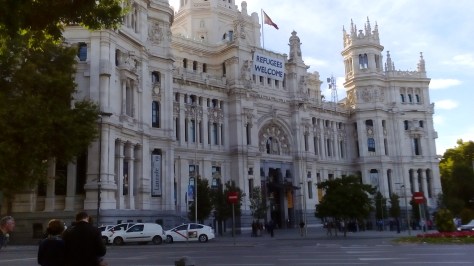
Last October I visited Madrid for the first time, a fleeting 48 hour visit.  I have been to Spain many times but for some reason Madrid in particular reminded me of the films of Spanish enfant terrible, director Pedro Almodóvar.

Almodóvar characteristically has strong female characters in his films and perhaps Madrid is one of his favourite locations?  A bit more research and I could probably find out.  Either way, if you have not seen any of Almodóvar’s work you really must.

For the time being however, by way of a poor substitute, here is a piece of mine.

Almodóvar’s Women

Almodóvar’s women chase me across Madrid.
Long faces peering through glass counters,
Fast food formulas of Latin allure
Tempting, as I splutter “Dos desayunos”.
Almond eyes seek the shape of my sounds.
Stresses land at random in the hectic breakfast hour.
Rat-tat-tat responses rattle my ears
As my half weary holiday Spanish brain
Finally fixes the question, before forcing out
A floundering, “Si gracias!”

 
Almodóvar’s women are confident in bars.
Blazing red lips breathe fire,
Blowing strident rings of smoke
As attentive hombres languish in hopeful adoration,
Undaunted by smouldering indifference.
Digital, giant billboards bombard the night,
Showing young Spain parading and promenading
Across building facades and street corners,
A sensual siren call promising prosperity,
Promiscuity and nothing (yet) to pay.

 
Almodóvar’s women are looking very young,
In Calle de la Montera they wait for friends to come,
Tight skirts, stacked heels and a shiver,
Watchful, of the crews on police patrol.
One eye on the tourists, to spot those on the cruise,
They purse their lips and frown,
Disappointed by their mirrors.
No hint of a new Penelope Cruz around
This corner, no life changing moment,
Transforms illusion into chance.

 
Almodóvar’s women should just give up the ghost,
They are never going to catch me,
They cannot get that close,
As I saunter into galleries, stroll across the park,
A stranger in their city with tickets, cash and plans,
From Kandinsky to Guernica, choosing where I stand.
Enveloped by the multiplex, I watch the curtain rise
On their next movie, awaiting its sad denouement,
Hoping they can fashion the living they desire,
Yet wondering, are they the indignados now?

Steve Bishop


Inspired by Julia

2016-02-25 17.24.13 (2)

Last year (2015) a number of events were organised to mark the tenth anniversary of the death of poet, novelist and playwright, Julia Darling. These were organised by Ellen Phethean, who co-founded Diamond Twig press with Julia, and a range of events took place at Live Theatre in Newcastle. Much of the publicity featured a photograph of Julia at one of her favourite haunts, the Rendezvous Café in Whitley Bay. A colleague of mine pointed this out and asked if anything was planned for the Rendezvous. I was ashamed to say, nothing was.

I contacted Ellen and put the idea to her. She was immediately enthusiastic so I agreed to follow it up. Mentioning this possibility to Claire Malcolm at New Writing North I discovered that NWN were re-publishing Julia’s first novel, Crocodile Soup, and would be keen to support the event too.

Earlier in the year Ellen had put out a call for poets to submit pieces of work, inspired by Julia, to Diamond Twig for publication on the website. An event to have poets read this work was arranged for the 5th June at Live Theatre. I had submitted a poem, The Chair, but could not attend the event due to a prior work commitment. Ellen came up with the suggestion that those poets who were unable to attend in June could read their poems at the Rendezvous on 6th August, the date we finally agreed upon.

Julia’s partner, Bev Robinson, came on board as the final piece in the organisational jigsaw. With the Poetry Virgins (Ellen, Kay Hepplewhite and Fiona McPherson) lined up to read from Crocodile Soup and to showcase some poems from a collection of previously unpublished work by Julia, the evening was set.

At very little notice we managed to turnout close to 100 people who were provided with ice cream (thanks to Tiz Weepers and the café staff) and a postcard featuring Julia’s poem about the café and the painting by Emma Holiday (see above). Also, thanks to Clare for the PA, nearly missed her on the night!

A great night and a fitting commemoration.

You can read lots of great poems inspired by Julia at the Diamond Twig site if you follow this link

http://diamondtwig.co.uk/hom/?cat=1

You can read my poem and memory of Julia below.

The Chair

The chair says nothing but speaks volumes,
Sitting there in its borrowed blue
History of a day, crying for a future.
No underwear adorns it,
No crumpled clothing dare cascade.
It stands upright, bright as a new recruit
Inviting new life, a new role, new companions.
Van Gogh painted such a chair in Arles,
Gwen John in Paris, unaccompanied,
Undecorated, alive with expectation.

 
This presence changes talk and dreams,
Focussing energies into a single purpose.
No distractions and no excuses,
Function shapes the perfect form.
A vibrant blue shimmer of impressions
Explode from the canvas
Like a visual manifesto, angry and alive.
Subtle blends of light, shadow and tone
Capture the quality of a moment
Reflected, in a room without mirrors.

 
Words fashion futures from a slender history,
Conjure tomorrow from the alchemist’s dream,
Transform into glitter, base metal and waste.
Silence hides a lonely cry to fill this vacant page
With an outpouring of rhythm and imagination,
Worlds populated by everyday philosophers
Gifted with insight and wisdom.
The chair remains mute but pleads for action.
Interpreting the world is one thing,
The point however, is to change it.

I bumped into Julia outside of the Tyneside Cinema one afternoon and amongst various chat, about this and that, she said she was going to devote her time to writing. Not that I was ever sure what Julia did for a day job. I knew her as an active member of the Anti-Apartheid Movement and through my international work on Newcastle Trades Union Council. Julia was the first person I knew who decided to devote herself to writing full time. I was filled with an overwhelming sense of admiration and a deep jealousy! This poem is about having the courage to seize that moment, or not!

Steve Bishop


Storytime

We are at the end of National Storytelling Week 2016 and today (6th February) is National Libraries Day 2016.  #librariesday

The following poem seemed like an apt celebration of both.

Odyssey-crop

Storytime

Miss Fairbairn read The Odyssey every Friday afternoon,
Keeping a class of thirty, usually squirming, six years olds
In rapt silence for an hour.
The two thousand year old tales of a Greek warrior,
Closed the week, with the promise of more to come.
We braved the lure of the sirens,
Shook to the terror of the cyclops,
Steered that narrow course between Scylla and Charybdis,
All the way to Ithaca
Into the arms of the patient Penelope.
Fifty years on one can reflect,
Perhaps Penelope waited too long,
Odysseus was, at best, a flawed hero.
Two thousand years from now
How will our failings be deconstructed,
Analysed and reassembled?
Without those Friday afternoons
How much of this would have mattered?
Should it matter now?
Yet still, somehow, it does.

Steve Bishop


See Me: by Tallulah Lines

exhibition_poster(2)

Tallulah Lines is an artist from Newcastle who has lived, worked, exhibited and muralled in the UK, Spain and Latin America. Her paintings mix realism and magic through bright colours, bold lines and quirky imagery.

The selection of paintings chosen for this exhibition are part of a series exploring moments of strength and moments of vulnerability. The portraits capture both people she knows closely (best friend, brother) and imagined characters inspired by her recent months in Latin America. The exhibition runs from 4 February – 31 March 2016.

David Bowie 1947 – 2016

Fragments from over forty years

Bowie16

Look up here, man, I’m in danger…..

New opening hours at the gym mean that just before 7 am on Monday, 11th January I was able to pull into the car park, switch off the car radio and think I was missing nothing more than the last few lines of the weather report.

Changed and warming up I glanced across at one of the TV screens on the far wall of the gym. Music plays through the gym sound system so, as ever on the TV screen, there was no sound, only images. It was Sky News broadcasting a split screen. One half showed the Mick Rock video from 1973 of David Bowie performing Life On Mars, blue eye shadow, blue suit, orange hair – unmistakable. The other half of the screen showed a current photograph of Bowie. The black and yellow footer repeating across the screen was too distant to read.

I went closer. I stood staring at the screen. The words were there but they would not go in,

Breaking News: David Bowie has died in New York aged 69 after an 18 month battle with cancer

David Bowie was on screen, singing Life On Mars, just as he had always done, just as he always would, surely? Nothing has changed; everything has changed…..

Bowie’s latest album Blackstar had been released on the previous Friday, his 69th birthday. I had been playing it over the weekend, courtesy of Amazon Auto-Rip, and was awaiting the hard copy, expected that day. It was dark, it was innovative, it was very good but something about it did not quite fall into place. This did not trouble me greatly. Over a forty year period I have rarely liked Bowie’s albums on first hearing. The first rush of expecting the Earth has to wear off before I can settle and listen properly. Hearing Blackstar again was going to be something else.

Next day

Its branches throwing shadows on the gallows for me….

One of the few exceptions to this general rule had been The Next Day, released in March 2013, amidst a frenzy of Bowie-mania with the fabulous David Bowie Is… exhibition also showing at the V&A in London.

Before The Next Day we had suffered 10 years of silence, at least in terms of new material. Re-masters, re-mixes, anniversary editions had come and gone to keep us ticking over. Bowie ‘product’ has never been in short supply but there is nothing quite the same as the thrill of hearing new material for the first time.

The Next Day had particular resonance for me as it came at a time in my life when the next day could well have been a long way off.

In October 2012 I fell, fractured my skull and catapulted my brain so hard within my head that it was bruised too. A sick note with ‘brain injury’ as the reason for being indisposed is not easy to come by.

When fit enough to return to work full time, in January 2013, within days a David Bowie single, Where Are We Now? was sneaked out, on Bowie’s 66th birthday.  I could not have put the question better myself.  My first thought? I might never have heard this! By the time the album was out in March, the V&A show was in full swing and to cap it all some additional tracks in the Autumn formed The Next Day Extra (2013), of which James Murphy’s 10 minute remix of Love Is Lost is a thing of absolute beauty. It had been a long wait but 2013 had made it worth it.

Bowie80s

Time will crawl till the 21st century lose…

The media seem to have lost a large chunk of Bowie’s career in their retrospectives over the past weeks. His return to form did not begin in 2013 but in 1993 with a run of seven excellent albums which seem to have slipped beneath the media radar.

The 1980’s do get quite a bit of airplay but most Bowie fans would be hard pressed to put together a compilation making one decent album from his output over most of that decade, Scary Monsters and Super Creeps (1981), being the notable exception along with the outstanding title track from Let’s Dance (1983).

Otherwise, much is forgettable. Being the decade of the Thatcher governments and the Miner’s Strike there was, in any case, much to distract us and if Bowie was going to choose any decade to hit a creative nadir this was probably the best one to go for.
Tin Machine
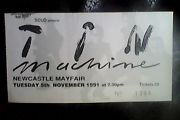
It was not until the advent of the much maligned Tin Machine in the late ‘80’s that I found my interest re-kindling. Musically the two albums by that band are not amongst Bowie’s best but the whole concept of getting back to small venues and connecting with an audience seemed to be invigorating. Seeing the band at Newcastle’s tightly packed Mayfair in November 1991 I was struck by the energy which went into the show, if a little disappointed that Tin Machine really did mean just that, with not a Bowie track in sight.

Still the creative juices were flowing giving us all renewed hope. We were not to be disappointed.

Black Tie
Getting my facts from a Benetton ad, I’m looking through African eyes….

Black Tie White Noise, released in 1993, is a much overlooked gem in Bowie’s oeuvre and heralded a real return to form. Like Bowie’s biggest selling album Let’s Dance, released 10 years earlier, it was produced with Nile Rodgers, but Black Tie White Noise is the good album made with Rodgers, not the biggest selling one. The album has a nice blend of jazz and rock influences, an eclectic mix of cover versions (Cream, Scott Walker and Morrissey), and even a guest return for Mick Ronson, who tragically died later that year. The limited edition bonus CD and DVD released in 2003 is also a must have for any Bowie fan.

Later the same year the equally underrated The Buddha of Suburbia (1993) soundtrack album continued the artistic renaissance.

Better was still to come. Teaming up with Brian Eno for the first time since the so-called Berlin Trilogy of the late Seventies (Low, “Heroes”, Lodger) 1995 saw the release of 1.Outside, one of Bowie’s best albums and a touchstone of this late career purple patch. It did not sell well. It was dark, it was challenging. It came with a dystopian vision of societal and personal relationship breakdown within a narrative about investigating art crime. No laughs but great music and a thundering industrial feel in places. It even managed to generate a top 20 single in Hallo Spaceboy, remixed with the Pet Shop Boys. I don’t think they could believe their luck!

outside tour
According to Brian Eno there is hours of material he and Bowie recorded in the making of 1.Outside. Could it be that there is the possibility of releasing more material from those sessions? A tantalising prospect.

If parts of 1.Outside are characterised by industrial density then Earthling (1997), which followed, was of an even greater ear melting intensity. Plugging in to the a la mode drums n bass of the period Bowie still manages to fashion a unique take on the genre and, in Little Wonder and I’m Afraid of Americans, lays down a couple of tracks that easily stand up to his diverse output.

I got seven days to live my life or seven ways to die….

Hours (1999), Heathen (2002) and Reality (2003) are the final three albums before the 10 year hiatus of new material. If Earthling was Bowie’s take on the drums n bass genre the albums that followed were very much back to the craft of songwriting and presenting the lyrics in the most appropriate context. Hours is an often criticised album, described by a friend of mine as Bowie on ‘cruise control’.  Nevertheless it contains some fabulous moments, not least Survive, Thursday’s Child and Seven.

Heathen tour
Heathen is the later Bowie album which receives the most plaudits and of these three it probably does contain the most standout tracks. It took me a while to realise this.  I was so disappointed with Heathen upon its release that, upon finding a minor fault in the CD returned it and got a copy of Beverley Knight’s Who I Am instead. Quite what made me take against this album with such vehemence I am not sure. Once again I was expecting the Earth and saw Hours as a staging point to something which was going to be a mind blowing new direction.

On reflection I realise that I had entirely missed the point and now acknowledge that Heathen deserves its acclaim. Quite apart from the excellent originals the cover of the Pixies’ Cactus is worth the price of entry alone.

Bowie had recorded an album for 2001 release titled Toy, which contained both new material and re-recordings of some of his 1960’s songs. Some of the new material intended for Toy found its way onto Heathen while Toy itself was never officially released. Some judicious time spent on the internet may result in you finding a copy if you are lucky, it is worth the search.

Reality was the album that formed the basis of Bowie’s final live tour in 2003/04, captured on the A Reality Tour DVD (2004) and CD (2010). The album itself finds Bowie confident and on top of his game, prepared to take chances with the jazz influenced Bring Me the Disco King and the slow croon of The Loneliest Guy. It is by no means his best set of songs and Bowie only selected New Killer Star for inclusion on the Nothing Has Changed (2014) fifty year career retrospective.

Then again he did not include the title track from The Next Day on that compilation, one of his best songs, and an act that can only be seen as typically perverse.

Inevitably, much of the media focus has been on the early years, when the foundations of the Bowie myth were laid and from where the most iconic images of Bowie emerge. Like many others of my generation, these were the years when my own conversation with David Bowie began….

ziggy

When the kids had killed the man I had to break up the band….

The 3rd July 1973 is a date known to all fans of David Bowie, the date on which the Spiders from Mars played their final gig at Hammersmith Odeon and Ziggy Stardust was no more.

As a 13 year old growing up in North Shields I was oblivious to the significance of the evening in those terms. Quite other matters were occupying me as this was the evening my father died, tragically young, only 43 years old. About half way through Bowie’s set by my calculations.

This somewhat strange synchronicity played no conscious part in my subsequent lifelong conversation with David Bowie, a conversation of which he was not aware and in which he never directly responded. It may have had some subliminal impact upon my teenage imagination, obsessed as it was with escape. Forty three years later, it is hard to know.

My father’s death taught me at an early age not to expect anything to last forever.

David Bowie was on my radar before July 1973 but, as we did not own a record player until the Christmas of that year, it was purely through the radio and, when our rented TV set was not on its way back to the Rediffusion shop, occasional Top of the Pops appearances.

Quite what triggered the lifelong conversation, I am not sure. That year was one in which Bowie seemed to be everywhere. The Jean Genie and Life On Mars were on the radio, Sorrow, Drive-In Saturday, there seemed to be an endless supply of reasons to look and listen again. The 3rd July gig was quite big news too!

Every teenager feels a little alien, a little strange, unable to quite fit in.  Perhaps this was Bowie’s attraction for so many of us.  He was clearly a bit odd, consciously outrageous and quite unpredictable.  For over forty years I genuinely have not known quite what to expect next!

aladdin
By the time it was possible to play records in the house the albums flowed in. Pin Ups (1973), not only great hair but Twiggy on the cover as a bonus. Aladdin Sane (1973), the crazy iconic lightning flash and songs that mentioned drugs, sex and wanking. Better than all of that, Mike Garson’s fabulous piano work on the title track. Even at the age of 13 I could see that this was going way beyond your average chart pop music.

Bowie’s previous albums were all still selling enough to occupy places in the charts. The Rise and Fall of Ziggy Stardust and the Spiders from Mars (1972), to be played at maximum volume, the cover instructed – who could refuse? I first heard Moonage Daydream on the dodgems at the Spanish City funfair in Whitley Bay, where the cover instruction was taken to its limit!

Hunky Dory (1971), a timeless collection of songs, which still remains a favourite to this day. For my daughter’s 18th birthday a few years ago, we put together a box of essential items required to get you through adult life. Film was represented by the Marx Brothers classic Duck Soup, literature by One Hundred Years of Solitude by Gabriel Garcia Marquez, life is not just laughs after all! There was a bottle of champagne in there and, of course, some cash. Music was represented by Bowie’s Hunky Dory.

You always need music to get through life but the more I think about that choice, you probably very specifically need a copy of Hunky Dory.

The Man Who Sold the World (1971), swooping and swirling, with its black cover and equally brooding and menacing soundscape. It was some years later that I discovered that the original cover for this album featured Bowie in a dress draped on a chaise lounge dropping a pack of cards. It gave the album a whole different perspective. Space Oddity (1969), which contained Bowie’s first big hit alongside a strange collection of hippy meanderings and paeans to love and peace.

pinups
By this time I also had the obligatory Ziggy spiky haircut and, hair products not being what they are today, spent hours in front of the mirror training my hair to grow upright. The effort throughout the mid ‘70’s to keep up with Bowie’s hairstyle changes was a source of much grief, as nothing I did would get quite the Pin Ups cover look. The great look on the cover of Young Americans(1975) was also a source of utter despair to my teenage hairstyling skills. So, it was with great joy that I greeted the straightforward greased back look of the Thin White Duke from Station to Station (1976)!

If this sudden influx of sound was driving the rest of my family nuts, being wrapped in teenage self-obsession, I did not notice. Why should I even care. The only thing that mattered in 1974 was my chance to buy, for the first time, a David Bowie album when first released. A chance to experience that rush of new sounds, new songs at the earliest opportunity.

I was not disappointed.

dogstour
We’ll buy some drugs and watch a band, then jump in the river holding hands….

Diamond Dogs (1974) was, in retrospect, Bowie’s goodbye to ‘70’s glam rock and roll but nobody could see that at the time. It was not only another collection of great songs but had the drama of being a concept album, based loosely around Orwell’s 1984, charting a declining corrupt society with a pair of lovers at its core, struggling to find their way through. Rebel Rebel had featured as a single before the album’s release but the real coup de theatre is the Sweet Thing/Candidate suite which took the bringing together of music and drama on the album to its zenith.

I remember playing Rock and Roll With Me to a friend of mine on the basis that I genuinely thought he would not hear anything better, quite possibly ever. I was aghast when he pronounced it rubbish and suggested that we should get outside and play footie!
station
You drive like a demon from station to station….

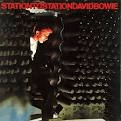
Young Americans (1975) wrongfooted us all. A soul album? What was that all about? But how good does it still sound now? The follow up, Station to Station (1976), coincided with a chance to see Bowie live in London at the Empire Pool, Wembley. This was quite an adventure for me and my mate Graeme. A couple of 16 year old lads from North Shields, a seven hour bus trip (each way!), a B&B in King’s Cross and hoping we found our way across London to the gig itself. Remarkably all of this fell into place without us being abducted by aliens, slave traders or simply being consumed somewhere in the big smoke, as our respective parents feared.

2016-01-24 11.20.53
True to style Bowie did not have a support band but played the surrealist film Un Chien Andalou by Luis Bunuel. The visionary work of Nina Hibbin and Sheila Whitaker would, by 1977, be bringing such material as this and much more besides to the Tyneside Cinema in Newcastle but in May 1976 Bunuel was not your standard fare. The collective gasps of 8,000 people, as a razor blade is taken to slit an eyeball during the film, is hard to forget.

I had never been in such a massive venue and, once finally onstage, Bowie was a carrot topped spec of black and white. The sound though, the voice, the rumble of Station to Station itself, the rush of Suffragette City, the urgency of Stay, through to a final footstomping The Jean Genie what more could you want?

2016-01-24 11.23.29
In June 1978 I saw Bowie live again at the City Hall, Newcastle by then a regular haunt and a much more manageable size of venue. It was a great show, heavy with tracks from the recently released Low (1977) and ”Heroes” (1977), but nothing was ever going to have quite the intensity of the London trip.

berlin
Blue, blue electric blue that’s the colour of my room…

As the punk sensation was gripping the nation, in 1976 and 1977, Bowie continued on his own sweet way. In Low and “Heroes” he produced two albums which had large chunks of instrumental on them and made no concession to the prevailing trend. Did any self respecting punk fan have these albums then? You bet they did. Bowie had produced Lou Reed’s classic Transformer (1972) and Iggy pop’s seminal Raw Power (1973) so was fully au fait with punk’s antecedents.

IggyBowie
The time spent in Berlin producing Low and “Heroes” also saw the revival of Iggy’s career with two Bowie produced and co-written albums The Idiot (1977) and Lust for Life (1977). With Bowie playing keyboards in Iggy’s band in the 1977 tour to promote The Idiot no harm was done to the credibility of either with their respective audiences. Seeing both onstage at the City Hall in March 1977 was some event!

Lodger (1979), the third of the so called Berlin trilogy is an altogether different affair, all songs, no instrumentals and a theme of travel, movement, displacement throughout. Repetition a song condemning domestic violence was soon to be adopted by the Au Pairs, a band I found myself following around the country for a couple of years, while other tracks, such as Yassassin, echo some of the work Brian Eno was to undertake with David Byrne on My Life in the Bush of Ghosts (1981).

By this time I had also acquired a pair of blue suede wrestling boots and, through making the acquaintance of a number of hairdressers, ensured that my hair was an orange henna hue! A bit late for Ziggy and all that but during the heady days of punk, anything could go!

Lodger is a bit of an overlooked classic in the Bowie canon, being overshadowed on the one side by the first two Berlin albums and on the other by Scary Monsters (and Super Creeps) (1981)Lodger was the first ‘other’ Bowie album I played after repeated listens to Blackstar following the news of Bowie’s death. Maybe its overall sense of transience, transformation and movement were the subliminal appeal.

scarymonsters
One flash of light but no smoking pistol….

Scary Monsters… catapulted Bowie back into the pop mainstream and with the video for the No.1 single Ashes to Ashes set the benchmark for the nascent MTV generation, in terms of how to creatively use visuals to support a song. It has yet to be equalled. The album perfectly balances the creative credibility of the Berlin albums with the pop sensibility of his earlier 70’s work and is in many ways a classic synthesis. It would be many years before Bowie was to come close to this level again, as the success of the album sucked him into the pop mainstream on a scale that even dwarfed the frenzy of the Ziggy years, but took much creative energy with it.

It is unfair though to judge Scary Monsters… by what followed. It stands alone as a force to be reckoned with and quite rightly remains one of Bowie’s most influential works.

blackstar
Seeing more and feeling less, saying no but meaning yes…

On 11th January the refrain from Girl Loves Me, the repeated question Where the fuck did Monday Go?, could not have been more apt.  After a blurred day at work I returned home in the early evening to find the familiar brown cardboard of an Amazon package on the passage window sill. When I eventually opened it the hard copy of Blackstar was in my hands. I looked at it, opened it, unfolded it, turned it over.

Black.

Black on black.

I slipped the booklet out with the album details and lyrics. Black text on black background.

In the few photographs, Bowie is barely present, emerging from or descending into an enveloping darkness.

Listening to the songs again, they suddenly fell into place. They had sounded strong over the weekend, picking up the baton where The Next Day left off, pushing into newer and more exploratory territory, even at this late stage.

Hearing them again, they took on a new dimension. Only a man coming face to face with his own mortality could produce this set of songs then package and present them in this way.

Only David Bowie could stage manage his own departure so beautifully.

blackstar2


Steve Bishop

24th January 2016

Atacama Vigil

chilean miners

It is perhaps fitting that the first poem I had published was almost by pure chance and also about Chile.

For some years I had been on the Board of a fantastic organisation called New Writing North which develops, supports and promotes new writing in the region. My presence on the Board had nothing to do with any creative writing skill but in my capacity as a local government bureaucrat with some responsibility for the arts!

Anyway, as a consequence I did make a point of reading the regular newsletter New Writing North produce and in one edition in 2013 there was a call for poems about human rights to be sent to the Human Rights Consortium, School of Advanced Study based at the University of London, for possible publication in an anthology of poetry about human rights.

With the deadline less than a week away I had no time to write anything new but had two poems which I thought fitted the criteria. One of those, was a poem started in 2010 and sort of completed in 2011 titled Atacama Vigil. I say ‘sort of’ because I had never been entirely sure that this poem was complete. There had been an additional four lines which were dropped so the version as presented had sat there ‘unfinished’ for sometime. I looked at the poem, I looked at the deadline and attached both poems to the e mail and promptly thought little more about it.

The poem is about the thirty three Chilean miners who spent two months trapped underground, from August to October 2010, before being miraculously rescued, one at a time, in a single man vessel aptly named the Phoenix. The poem goes like this.

Atacama Vigil

The world watched the hours stretch
While the Phoenix, fashioned as your saviour,
Plumbed the narrow shaft to inner space,
One man wide, one man at a time.
For a while, we thought you were lost.
But in the certain knowledge of discovery
You created a subterranean world,
Milk, fish and work,
Discipline designed to defy death.

 
Above ground; Camp Hope.
Everything from tents to t-shirts,
Wives to girlfriends,
Schools, showers and Sky News.
Previously desk bound reporters
Revealed their Spanish speaking skills,
The unknown wives of unknown men
Filled our screens and spilled their dreams,
Copiapo was on the map.

 
Your chances, slimmer than Chile itself
Frayed at first then strengthened
As the rescue mission tied the threads
Of science and solidarity to your resolve.
Slowly, the earth returned you,
Sunlight shocked and embraced,
Sounds unfettered, shook and exploded,
Survival was sucked in with every breath,
Celebrations erupted on Chile’s streets.

 
Only the mining bosses kept their heads low;
What price the price of copper now?
What price the rush to squeeze dry desert
Just a little harder, dig a little further?
What price the lives of thirty three?

Steve Bishop

I was pleasantly surprised when I received an email letting me know that Atacama Vigil had been selected for publication. Of the 600 poems entered, 150 had been selected and mine was one of them!

The anthology titled, In Protest: 150 Poems about Human Rights, was launched at the Bloomsbury Festival in London on 20th October 2013.  The following link will take you to the site to buy the full book

http://events.sas.ac.uk/support-research/publications/997

I could not make the launch.  Did I care? It would have been nice to go but my first published poem was in an anthology sitting alongside work by Carol Ann Duffy and Ruth Padel amongst others; I would cope!


Pablo Neruda’s Houses – Part Three


2008-05-25 18.51.45.jpg

Santiago

Santiago was very important to Neruda, both as a young student and in his later years living in the house he built with his wife Mathilde, La Chascona.

The tears of joy which greeted us at the airport when we arrived in Chile were turned to tears of sadness as we departed Vina del Mar and the company of Inés and her daughters. Not only had we been driven to Neruda’s houses but had been lucky enough to have informed guides to the Chilean coast and built in recommendations for the best places to eat and visit, not least the temptations of the Vina del Mar casino!

We took our leave and made our way back to Santiago by bus, this time to see something of the city and, of course, to visit the last of Neruda’s houses, La Chascona, named after the wild red hair of Neruda’s wife, Mathilde.

Santiago has a vibrant, modern European, especially Spanish feel, with a thriving café culture and the energy which youth and students bring to a city. As with all capital cities Santiago was vital to the politics of Chile at the time of the coup d’etat, being the seat of government and home to the presidential palace.

As a senior senator, internationally renowned poet and long standing member of the Communist Party of Chile, Neruda was selected as the Party’s candidate to run for the presidency in 1970. However, negotiations with the socialists resulted in the agreement to have a single Popular Unity candidate in the person of Salvador Allende, who was subsequently endorsed as president following the elections on 4th September 1970.

2008-05-24 16.46.45

Neruda had spent three years in exile, following his denunciation of the government of Gonzalez Videla in the 1940’s. He spent a year in hiding before having to be smuggled over the Andes into Argentina then turning up at the first International Peace Congress in Paris in 1949, in spite of the Chilean government insisting that he was only hours away from being captured! Nevertheless, Neruda did not return to Chile from exile until 1952.

The visit to La Chascona was also a guided visit but could not have been more different to the experience of Isla Negra. Our guide was a young Chilean student, an enthusiast for Neruda who responded to my own enthusiasm with some delight and a degree of amazement. When discussing a photograph which included Neruda’s friend Alberto Rojas Jimenez I could not help but mention the poem ‘Alberto Rojas Jimenez Comes Flying’. Our guide was delighted that I had even heard of this poem, from the ‘Residence on Earth’, and our credibility was sealed.

Far from denying Neruda’s politics our guide was happy to engage in this discussion. He explained how the house had been ransacked by the fascists following the coup while Neruda lay ill in hospital and sections had to be rebuilt and restored, they had been so badly damaged.

We talked about the mixed feelings in modern Chile, with people attempting to put the years of dictatorship behind them while at the same time having to come to terms with the reality of this part of the country’s history.

Our visit to Chile and time in Santiago was coming to an end. Santiago was both the hope of the Chilean people and the scene of the crushing of its fledgling democracy in the 1973 coup. My final poem attempts to capture the mixture of sentiments around Neruda’s final days in the city, my own sense of imminent departure and the possibility of not returning.

2008-05-23 21.15.03.jpg

c) La Chascona

Wild haired beauty of the Santiago backstreets
If I caress your head and kiss your mouth
Will these curls unravel slowly,
Disentangling my fingers from your hair?

Give me the chance to cradle your sorrow,
Whispering away your brutalised past,
Let me revive your faith in the future,
Let me bring your tormentors to trial.

Your resurrection has been lovingly drawn,
Sensitive to the grace of your features
Respectful of your slender fragile aura,
Re-touching hidden scars, to lightly heal.

Imagining the conflicts you survived
Calm hands have soothed your aching body,
Stroked your hips, back, neck and arms,
Lingered on the fullness of your lips.

You deserve more than a holiday romance,
Yet this first embrace may be our last.
Thick unfamiliar words, mumbled in confusion
Fall heavily as I grope towards the door.

Like an uncertain lover, I stumble
As my rushed departure beckons.
Though distance may determine our destiny,
Your perfume still haunts my every step.

Steve Bishop

Epilogue

Less than two weeks after the coup d’etat in Chile, Pablo Neruda died, on 23rd September 1973.
Inevitably Neruda’s funeral was the first mass expression of opposition to the generals. Try as they might the authorities could not prevent thousands from pouring out onto the streets to mark the passing of Chile’s greatest poet.

The crowd proclaimed their solidarity in a call and response calling out names in a roll call then proclaiming their presence by shouting back, “Presente!”

This went on for some time before the call then went up from the crowd,
“Comrade Pablo Neruda!”

With the inevitable response, from the entire crowd……
“Presente!”

The dictatorship was in its infancy but resistance was already underway.

Pablo Neruda’s Houses – Part Two

Isla Negra

Neruda discovered and moved into the house at Isla Negra in 1939.

The journey to Isla Negra takes you through the fabulous vineyards of central Chile, the smell of Sauvignon Blanc is in the air! In Chile it was the rule that you could only drink Chilean wine but this was no great hardship!

With Inés once again at the wheel we could sit back as tourists and admire the landscape, although a little navigation was necessary as we got nearer to Isla Negra which is tucked away on the Chilean coast.

The clouds which had gathered and the rain that had threatened us for the entire journey, descended just as we arrived. Alongside the rain, although I think this was coincidence rather than any dark omen, three busloads of schoolchildren arrived, backpacked and noisy, as school children are. A visit to Isla Negra for the children of Chile was clearly the equivalent of English children being taken to the British Museum for the day. While that in itself would be some cause for excitement, the opportunity to escape the days’ normal timetable was surely as great an incentive!

Having driven for two hours however we decided it would be wiser to eat first and let the school party work its way through before we made our visit. So, with the rain lashing and the South Pacific pounding outside our window, we ate lunch in the second of Pablo Neruda’s Houses.

Neruda’s poetry refers often to the sea. However, he does not regard the sea in an unreal or romantic way; rather he appreciates its awesome power.

Isla Negra was a guided visit. The school children safely well ahead of us, our small group of adults huddled in anticipation. Our guide was a North American, full of good intentions and well versed in her script.

She told us of Neruda’s love for his wife Mathilde.

She told us of his love of the sea and collecting nautical memorabilia.

She told us of his love of the French poet Baudelaire.

On the writing desk in Neruda’s study overlooking the South Pacific are two framed photographs: Baudelaire and the Russian revolutionary, Lenin. Our guide chose to ignore the latter.

The visit continued in similar vein. Ships bows, seashells, big shoes…..

Interesting, of course, but was this really the full Neruda?

Was this the Neruda who had been a communist senator?

Was this the Neruda who had arranged for 2,000 Spanish emigres to escape the fascists in Spain on board the Winnipeg?

Was this the Neruda who stepped aside to give Allende a clear run as the Popular Unity candidate in the 1970 elections in Chile?

The Neruda described by our guide was undoubtedly charming and witty. A quirky, idiosyncratic individual who wrote some very good love poetry and was passionate about the sea.

He and his wife are buried here, did you know?

My blood was boiling.

This was a shadow Neruda, an imposter with no politics and few opinions, presented to us as a nice uncomplicated character who would not scare the tourists.

My own poem, reflecting upon the visit to Isla Negra, attempts to capture this rage.

b) Isla Negra

Lifelong Communist, Pablo Neruda,
Who loved horses, sea-shells and women’s breasts,
(Not necessarily in that order)
Lies buried in the airbrushed agony
Of Isla Negra.

This soulless sideshow sweeps
Subversion under the carpet,
Mocks the meaning of Marxist,
Sanitises the politics in poetry,
Offering ice-cream soda fizz
Before the full blooded wine of Chile.

On the writing desk observe
Baudelaire, balanced by Lenin.
Outside, the beauty of the sky
The beach, the rocks,
The solace of the ocean
Echoed, in the rhythm of his verse.

A sculpted hammer and sickle
Slips the censor, gracing the lobby.
In the shop of mementoes
I buy a postcard, Allende and Neruda,
Side by side.
Some things are irrefutable.
I step outside, smell the air,
Hear the South Pacific thunder,
Doubting that he would see
His legacy in these commodities.

Steve Bishop

Clutching the postcard with as much dignity as I could muster we marched out into the Chilean downpour and Inés drove us back to Vina del Mar.

I suffered a torment of silent frustration!